
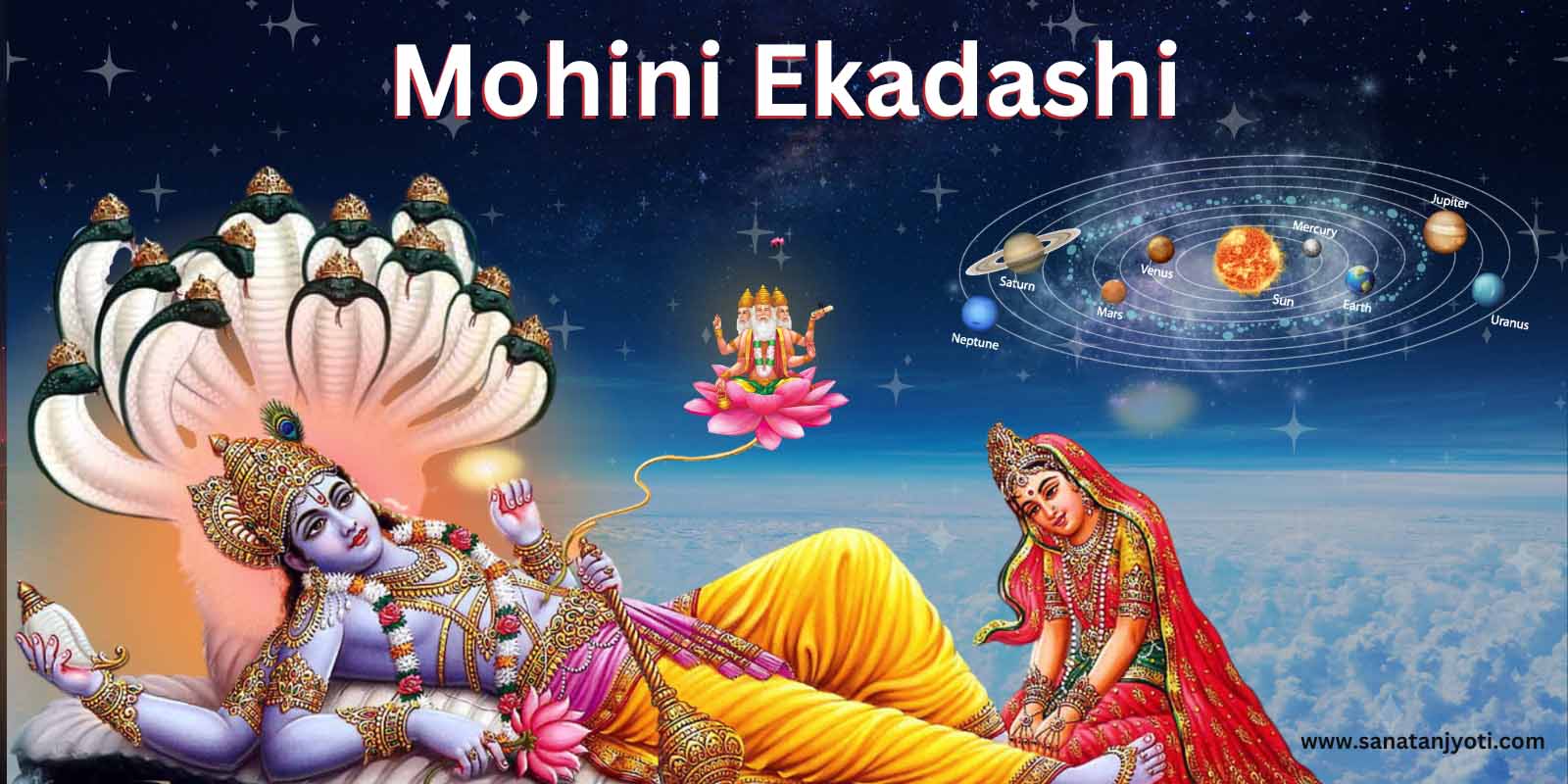
The Ekadashi that falls during the Shukla Paksha of the Vaishakha month is known as Mohini Ekadashi. In Hinduism, the Ekadashi Vrat is considered to have special religious significance. According to religious beliefs, observing the Mohini Ekadashi Vrat helps a person move toward freedom from sins and receive the blessings of Lord Vishnu.
Mohini Ekadashi 2027 will be observed on Sunday, May 16. The Ekadashi Tithi will begin on the evening of May 15 and continue until the evening of May 16.
When is Mohini Ekadashi 2027?
In 2027, Mohini Ekadashi will be observed on Sunday, May 16. It falls on the Ekadashi Tithi of the Shukla Paksha in the month of Vaishakha.
Mohini Ekadashi 2027: May 16, 2027, Sunday
Ekadashi Tithi Begins: May 15, 2027, at 6:19 PM
Ekadashi Tithi Ends: May 16, 2027, at 5:14 PM
The Tithi and Parana timings may vary depending on the location.
Therefore, devotees observing the Vrat should check the timings according to the: -Local Panchang of their city.
Significance of Mohini Ekadashi
Yudhishthira asked Lord Shri Krishna which Ekadashi falls during the Shukla Paksha of the Vaishakha month and what its significance is. Lord Shri Krishna then explained the significance of Mohini Ekadashi to him.
According to the religious story, in ancient times, Lord Shri Rama also asked Sage Vashishtha about the significance of this Ekadashi. Sage Vashishtha explained that the Ekadashi of the Shukla Paksha in the month of Vaishakha is known as Mohini Ekadashi. It is regarded as an Ekadashi that destroys sins and is considered one of the significant Vrats.
According to religious beliefs, observing the Mohini Ekadashi Vrat helps a person move away from the influence of worldly attachments and sinful actions and receive the blessings of Lord Vishnu.
Mohini Ekadashi Vrat Katha
Sage Vashishtha narrated the story of Mohini Ekadashi to Lord Shri Rama and told him that there was a beautiful city called Bhadravati on the banks of the Saraswati River. A king named Dhritiman ruled there.
In the same city lived a Vaishya named Dhanpal. He was wealthy, prosperous and religious by nature. He was always engaged in virtuous deeds. He had built public water shelters, wells, monasteries, gardens, ponds and houses for the welfare of people. He was a devotee of Lord Vishnu and was known for his calm nature.
Dhanpal had five sons—Sumana, Dhrutiman, Medhavi, Sukrit and Dhrishtabuddhi. Among them, Dhrishtabuddhi was involved in bad company and immoral activities. He was addicted to gambling and other vices. He also continued to waste his father's wealth.
One day, when Dhrishtabuddhi was seen engaging in immoral conduct, his father expelled him from the house. His family members and relatives also abandoned him. After this, he began living a life filled with sorrow and grief.
One day, as a result of his past merits, he reached the ashram of Sage Kaundinya. He asked the sage about a way to free himself from his troubles. Sage Kaundinya advised him to observe the Vaishakha Shukla Ekadashi, known as Mohini Ekadashi.
Following the instructions of the sage, Dhrishtabuddhi observed the Mohini Ekadashi Vrat according to the prescribed rituals. According to religious beliefs, the effect of the Vrat helped him become free from his sins and receive the blessings of Lord Vishnu.
Thus, the story of Mohini Ekadashi inspires a person to stay away from wrong actions and worldly attachments and follow the path of Dharma and devotion.
To learn more about the origin, mythological story and religious significance of Ekadashi: -Read our article on the Origin of Ekadashi.
Mohini Ekadashi Puja Vidhi
One day before Mohini Ekadashi, that is, on the Dashami Tithi, devotees should take a bath with devotion and have a Satvik meal. According to religious traditions, one should sleep on the floor and observe self-restraint on the night of Dashami.
On Ekadashi, wake up early in the morning, take a bath and take the Vrat Sankalp while meditating on Lord Vishnu.
The following mantra is recited at the time of taking the Sankalp:
Adya sthitva niraharah sarvabhogavivarjitah.
Shvo bhokshye Pundarikaksha sharanam me bhavachyuta.
Meaning: O Lotus-Eyed Lord Narayana! Today, I will remain without food, giving up all worldly pleasures, and I will have food the following day. O Achyuta, please accept me as your refuge.
After this, worship Lord Vishnu before His idol or image by offering incense, a lamp, sandalwood paste, flowers and Naivedya. Chant Lord Vishnu's mantras and observe the Vrat throughout the day according to your faith and capacity.
Do you have any questions related to the Mohini Ekadashi Vrat, Puja Vidhi or religious rituals?
Get a free consultation from our Acharya Ji today and find answers to your Puja-related questions.
Night Vigil on Mohini Ekadashi
There is also a tradition of staying awake at night in remembrance of Lord Vishnu on Ekadashi. During this time, devotees can remember Lord Vishnu and engage in Bhajan, Kirtan and Mantra Jaap.
Devotees may observe the night vigil according to their faith and capacity.
Mohini Ekadashi Parana
On the Dwadashi Tithi, take a bath in the morning and worship Lord Vishnu. After this, according to your tradition, offer food to Brahmins or people in need and give Daan-Dakshina.
Afterward, break the fast with family members. The exact Parana time may vary depending on the location and Panchang. Therefore, make sure to check the Dwadashi Parana timing according to the Panchang of your city.
Rules for Mohini Ekadashi Vrat
Devotees observing the Mohini Ekadashi Vrat can follow the fast according to their capacity and health. Religious traditions emphasize the worship of Lord Vishnu, self-restraint, Satvik food and remembrance of the Lord's name on this day.
Before observing the Vrat, one should consider their health condition. In particular, people who are unwell, elderly, pregnant or taking regular medication should prioritize medical advice when deciding whether and how to observe the fast.
Religious Significance of Mohini Ekadashi
Mohini Ekadashi is considered an important Vrat associated with devotion to Lord Vishnu and self-discipline. According to religious beliefs, observing this Vrat helps a person move toward freedom from sinful actions, attain mental peace and receive the blessings of Lord Vishnu.
The story of Mohini Ekadashi also conveys the message that even after following the wrong path, a person can make an effort to give life a better direction through sincere repentance, devotion and virtuous deeds.
What to Do on Mohini Ekadashi?
• Take a bath in the morning and meditate on Lord Vishnu.
• Take the Sankalp to observe the Ekadashi Vrat with devotion.
• Worship Lord Vishnu.
• Chant Vishnu Mantras or the name of the Lord.
• Observe a Satvik Vrat according to your capacity.
• Spend the night in Bhajan, Kirtan or remembrance of Lord Vishnu.
• Offer food and donations to people in need on Dwadashi.
• Break the fast at the appropriate time on the Dwadashi Tithi.
Mohini Ekadashi is an important Ekadashi Vrat observed during the Shukla Paksha of the Vaishakha month. According to religious beliefs, worshipping Lord Vishnu and observing the Vrat on this day helps a person move toward freedom from sins and spiritual growth.
In 2027, Mohini Ekadashi will be observed on Sunday, May 16. The Ekadashi Tithi will continue from the evening of May 15 until the evening of May 16. The Tithi and Parana timings may vary slightly depending on the location.