

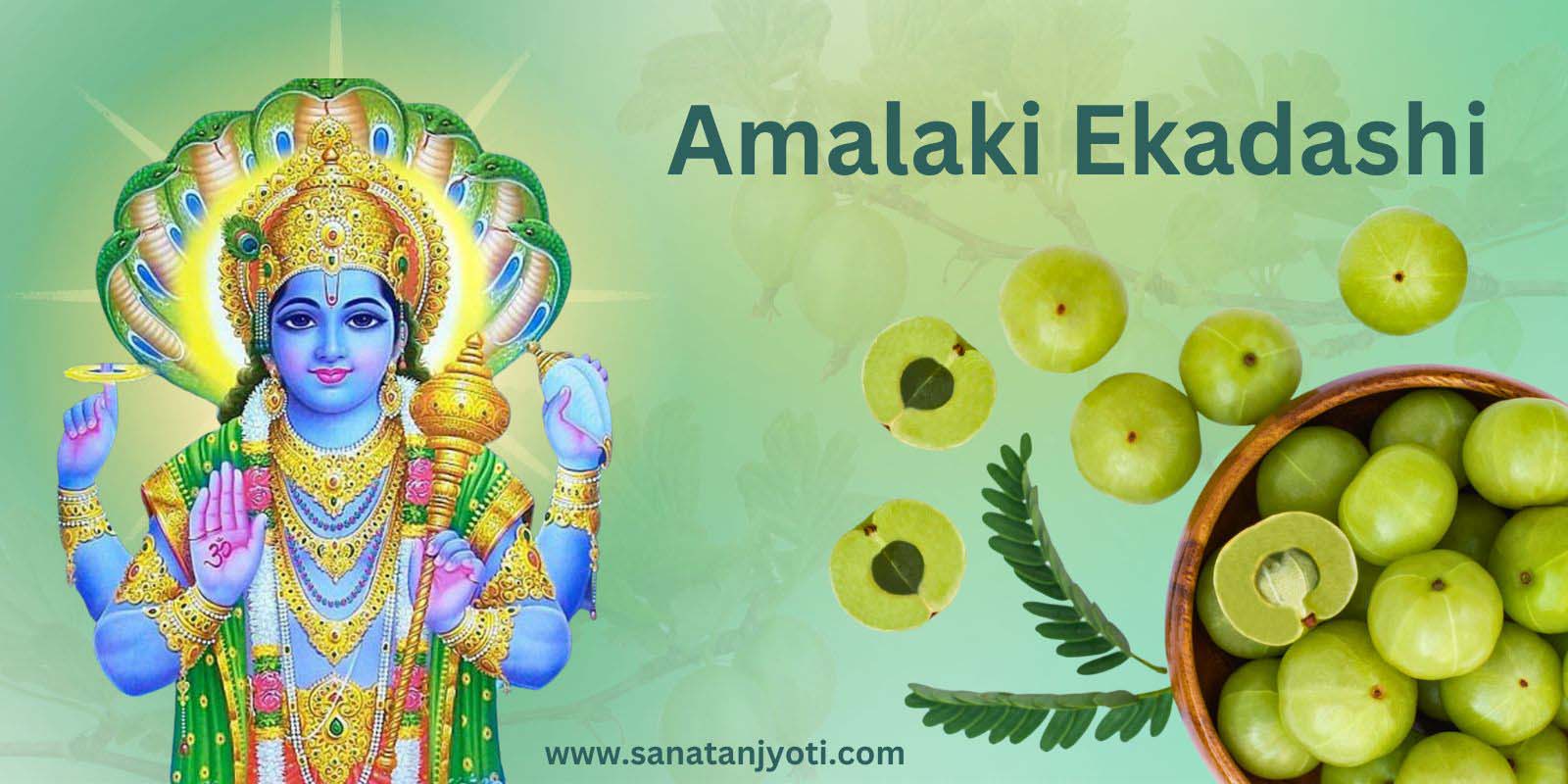
The Ekadashi that falls during the Shukla Paksha of the Phalguna month is known as Amalaki Ekadashi. In Sanatan Dharma, this Ekadashi, dedicated to Lord Vishnu, is considered to have special religious significance. Amalaki Ekadashi is also known as Amla Ekadashi.
According to mythological beliefs, this Ekadashi is associated with Lord Vishnu and the sacred Amla tree. In religious traditions, the Amla tree is considered dear to Lord Vishnu. Therefore, along with worshipping Lord Vishnu, worshipping and performing Pradakshina around the Amla tree on Amalaki Ekadashi is also considered significant.
When is Amalaki Ekadashi 2027?
Amalaki Ekadashi 2027 will be observed on Thursday, March 18. It falls during the Shukla Paksha of the Phalguna month. According to the Panchang, the Ekadashi Tithi will begin at 4:24 AM on March 18, 2027, and end at 1:53 AM on March 19, 2027.
Amalaki Ekadashi 2027: March 18, 2027, Thursday
Ekadashi Tithi Begins: March 18, 2027, at 4:24 AM
Ekadashi Tithi Ends: March 19, 2027, at 1:53 AM
The Tithi and Parana timings may vary slightly depending on the location.
Significance of Amalaki Ekadashi in the Phalguna Shukla Paksha
Yudhishthira said to Lord Shri Krishna, “Please tell me the name and significance of the Ekadashi that falls during the Shukla Paksha of Phalguna.”
Lord Shri Krishna said, “O son of Dharma, listen. I will now tell you about an incident that Sage Vashishtha narrated when King Mandhata asked him about it. The Ekadashi of the Shukla Paksha of Phalguna is known as Amalaki. This sacred Vrat is believed to lead to the attainment of Vishnu Loka.” King Mandhata then asked, “Please tell me when the Amalaki tree originated.”
Amalaki Ekadashi Vrat Katha
Sage Vashishtha said that Amalaki is a great tree believed to destroy all sins. According to the story, when Lord Vishnu spat, a radiant drop resembling the Moon emerged from His mouth. The drop fell to the Earth, and from it the great Amalaki, or Amla, tree emerged. It is regarded as the primordial among all trees.
At the same time, Lord Brahma was created for the purpose of creating all living beings. From him came the various forms of creation. Brahma Ji gave rise to Devas, Danavas, Gandharvas, Yakshas, Rakshasas, Nagas and great sages with pure hearts.
Among them, the Devas and sages came to the place where the Amla tree, beloved of Lord Vishnu, stood. They looked at the tree and began wondering about it. They were familiar with all the other trees, but they did not know about this particular tree.
Seeing them concerned, a divine voice from the sky said:
“O great sages! This is the supreme Amalaki tree, which is dear to Lord Vishnu. Merely remembering it is believed to give the merit of donating a cow. Touching it is believed to give twice that merit, while eating its fruit is believed to give three times the merit.”
Lord Vishnu is believed to reside at its roots, Brahma at its upper portion, and Lord Rudra in its trunk. Sages reside in its branches, the Devas in its twigs, the Vasus in its leaves, the Maruts in its flowers and all the Prajapatis in its fruits.
The sages said, “O Lord! If you are pleased with us, please tell us about a Vrat that can bestow the fruits of heaven and Moksha for the benefit of humanity.”
Lord Vishnu said, “If Dwadashi in the Shukla Paksha of Phalguna is associated with Pushya Nakshatra, it is considered highly meritorious and capable of destroying great sins. Listen to the proper method of observing this Vrat. The merit obtained through visiting all sacred pilgrimage sites and the benefits received from different forms of charity can be attained by following the prescribed method of this Vrat.”
Sage Vashishtha said, “O King! After saying this, Lord Vishnu, the Lord of the Devas, disappeared from that place. Thereafter, all the great sages observed the Vrat according to the prescribed method. In the same way, you should also observe this Vrat.”
To learn more about the origin of the Ekadashi Vrat, its mythological story and religious significance associated with Lord Vishnu: -Read our article on the Origin of Ekadashi.
Amalaki Ekadashi Puja Vidhi
On Ekadashi, after completing the morning rituals, take a Sankalp saying that you will remain without food on Ekadashi and have food the following day. Pray to the Lord to keep you under His refuge.
A learned person should have a golden idol of Lord Parashurama prepared. The idol should be made of gold according to one's capacity and means. After taking a bath and completing the necessary rituals, perform Puja and Havan.
After this, take all the required Puja materials and go to the Amla tree. Establish a new Kalash and place Pancharatna and divine fragrances in it along with water. Arrange rows of lit lamps around the Puja area.
Place a golden idol of Lord Parashurama on top of the Kalash. Also arrange a new umbrella, footwear and clothes for the Puja and spend the night there.
After this, remembering the name of Lord Vishnu, perform 108 or 28 Pradakshinas around the Amla tree. In the morning, perform the Aarti of Shri Hari. Worship the Brahmana and offer all the Puja materials to him.
Donate the clothes, footwear and other items associated with Lord Parashurama. After this, touch the Amla tree and perform its Pradakshina. Take a bath and then respectfully offer food to the Brahmins. After feeding them, have your own meal with them.
Do you have any questions related to the Amalaki Ekadashi Vrat, Puja Vidhi, Sankalp, Parana or religious rituals?
Get a free consultation from our Acharya Ji today and find answers to your Puja-related questions.
Religious Significance of Amalaki Ekadashi
Amalaki Ekadashi is considered an important Vrat associated with Lord Vishnu and the sacred Amla tree. According to religious beliefs, various deities are believed to reside in the Amla tree, and the tree is described as being especially dear to Lord Vishnu.
For this reason, traditions associated with Amalaki Ekadashi also mention worshipping, touching and performing Pradakshina around the Amla tree along with the worship of Lord Vishnu.
According to religious beliefs, observing this Vrat with faith and devotion is associated with spiritual merit and the blessings of Lord Vishnu.
What to Do on Amalaki Ekadashi?
On Amalaki Ekadashi, devotees can worship Lord Vishnu and observe the Vrat according to their faith and capacity.
• Take a bath in the morning and take the Vrat Sankalp.
• Worship Lord Vishnu and Shri Hari.
• Worship the Amla tree.
• Chant Lord Vishnu's Mantras.
• Read or listen to the Ekadashi Vrat Katha.
• Observe a fast or have fruits and other permitted foods according to your capacity.
• Perform Pradakshina around the Amla tree.
• Spend the night remembering Lord Vishnu and engaging in Bhajan and Kirtan.
• Perform Parana at the appropriate time on Dwadashi.
• Make donations and perform charitable acts according to your faith and capacity.
Significance of the Amla Tree During Amalaki Ekadashi Vrat
The Amla tree holds special significance in the religious traditions associated with Amalaki Ekadashi. According to the mythological story, the Amla tree is considered dear to Lord Vishnu, and different parts of the tree are described as being associated with various Devas and deities.
For this reason, worshipping the Amla tree, performing Puja beneath it and performing Pradakshina around it on this Ekadashi are considered religiously significant.
Why Is the Amalaki Ekadashi Vrat Observed?
According to religious beliefs, the Amalaki Ekadashi Vrat is observed with the intention of attaining freedom from sins, spiritual merit and the blessings of Lord Vishnu.
The story associated with this Vrat describes the origin of the Amla tree and its religious significance. Therefore, devotees worship the Amla tree along with Lord Vishnu on this day.
Fasting and Puja are matters of faith, so they should be observed according to one's physical capacity and health.
Amalaki Ekadashi 2027 will be observed on Thursday, March 18. The Ekadashi Tithi will begin at 4:24 AM on March 18 and end at 1:53 AM on March 19. The Tithi and Parana timings may vary depending on the location, so it is advisable to give priority to the local Panchang.
Amalaki Ekadashi is an important Vrat associated with Lord Vishnu and the sacred Amla tree. Its mythological story describes the origin of the Amla tree and its religious significance. Devotees express their faith on this day by worshipping Lord Vishnu, observing the Vrat, listening to the Vrat Katha and worshipping the Amla tree.
Amalaki Ekadashi inspires devotees to move forward on the path of devotion, self-discipline and religious conduct.