What is Rinmochak Mangal Stotra?
RinmochakMangal Stotra is a Stotra dedicated to Lord Mangal Dev. According to religious and astrological beliefs, it is recited with the intention of seeking relief from debt, financial difficulties and obstacles associated with Mars. The Stotra remembers the various names and forms of Lord Mangal and offers prayers for relief from debt, poverty, fear and suffering, along with the blessings of happiness and prosperity.
RinmochakMangal Stotra consists of a total of 12 Shlokas. Each Shloka describes the forms, qualities and powers of Lord Mangal and seeks his grace for devotees.
Who is Mangal Dev?
In the Sanatan tradition, Mangal Dev is known by names such as Bhumiputra, Bhauma, Kuja and Angaraka. In astrology, Mars is considered the planet associated with courage, valor, energy, land, siblings and the power to take action.
RinmochakMangal Stotra also mentions several names of Lord Mangal and offers prayers for relief from debt and other difficulties.
Complete Text and Authentic Hindi Meaning of RinmochakMangal Stotra
Shloka 1
Mangalo Bhumiputrashcha Rinaharta Dhanapradah.
Sthirasano Mahakayah Sarvakarmavirodhakah.
Hindi Meaning:
Mangal Dev is the son of the Earth, the remover of debt and the giver of wealth. He is firm in his seat and possesses a mighty form, while also being associated with obstacles or opposition in various actions.
Shloka 2
Lohito Lohitakshashcha Samagananam Kripakarah.
Dharatmajaḥ Kujo Bhaumo Bhutido Bhuminandanah.
Hindi Meaning:
Mangal Dev is Lohita and has red eyes. He bestows his grace upon those who sing the Sama Veda. He is the son of the Earth, known as Kuja and Bhauma, the giver of prosperity, and the beloved son of the Earth.
Shloka 3
Angarako Yamashchaiva Sarvarogapaharakah.
Vrishtheh Kartapaharta Cha Sarvakamaphalapradah.
Hindi Meaning:
Mangal Dev is known as Angaraka and is comparable to Yama. He is regarded as the remover of all diseases. He is associated with the coming and withdrawal of rainfall and is the giver of the fruits of all desires.
Shloka 4
Etani Kujanamani Nityam Yah Shraddhaya Pathet.
Rinam Na Jayate Tasya Dhanam Shighram Avapnuyat.
Hindi Meaning:
A person who recites these names of Kuja every day with devotion is believed not to incur debt and is said to attain wealth quickly.
Shloka 5
Dharanigarbhasambhutam Vidyutkantisamaprabham.
Kumaram Shaktihastam Cha Mangalam Pranamamyaham.
Hindi Meaning:
I bow to Mangal Dev, who was born from the womb of the Earth, who shines with the brilliance of lightning, who appears in youthful form and holds the Shakti weapon in his hand.
Shloka 6
Stotram Angarakasyaitat Pathaniyam Sada Nribhih.
Na Tesham Bhaumaja Pida Svalpapi Bhavati Kvachit.
Hindi Meaning:
People should regularly recite this Stotra dedicated to Angaraka. According to the religious belief expressed in the Shloka, those who recite it do not suffer from even the slightest affliction associated with Bhauma (Mars).
Shloka 7
Angaraka Mahabhaga Bhagavan Bhaktavatsala.
Tvam Namami Mamashesharinam Ashu Vinashaya.
Hindi Meaning:
O Angaraka! O Most Fortunate One! O Lord! O compassionate protector of devotees! I bow to you. Please destroy all my debts quickly.
Shloka 8
Rinarogadidaridryam Ye Chanye Hyapamrityavah.
Bhayakleshamanastapa Nashyantu Mama Sarvada.
Hindi Meaning:
May all my difficulties, including debt, disease, poverty, untimely death, fear, suffering and mental anguish, always be destroyed.
Shloka 9
Ativaktra Duraradhya Bhogamukta Jitatmanah.
Tushto Dadasi Samrajyam Rushto Harasi Tatkshanat.
Hindi Meaning:
O Ativaktra! You are difficult to please. You are associated with worldly enjoyment and liberation and are the Lord of those who have mastered themselves. When pleased, you can grant sovereignty, and when displeased, you can take it away instantly.
Shloka 10
Virinchishakravishnunam Manushyanam Tu Ka Katha.
Tena Tvam Sarvasattvena Graharajo Mahabalah.
Hindi Meaning:
If even Brahma, Indra and Vishnu are subject to your great power, then what can be said about ordinary human beings? Therefore, through your immense strength, you are regarded as a mighty ruler among the planets.
Shloka 11
Putran Dehi Dhanam Dehi Tvamasmi Sharanam Gatah.
Rinadaridryaduhkhena Shatrunam Cha Bhayattatah.
Hindi Meaning:
O Mangal Dev! Bless me with children and wealth. I have sought refuge in you. Protect me from debt, poverty, suffering and the fear of enemies.
Shloka 12
Ebhirdvadashabhih Shlokaih Stauti Cha Dharasutam.
Mahatim Shriyam Apnoti Hyaparo Dhanado Yuva.
Hindi Meaning:
A person who praises the son of the Earth through these twelve Shlokas attains great prosperity and becomes blessed with wealth.
॥ Iti Shri Rina Mochak Mangal Stotram Sampurnam ॥
What is the Religious Significance of RinmochakMangal Stotra?
RinmochakMangal Stotra remembers the various names and forms of Lord Mangal. Its Shlokas contain prayers for relief from debt, poverty, fear, suffering and obstacles in life.
According to religious and astrological beliefs, Mars is associated with courage, valor and energy. Therefore, the worship of Mangal Dev is also regarded as a spiritual practice for developing self-confidence and the strength to take action.
What Benefits are Associated with RinmochakMangal Stotra?
According to religious beliefs, the recitation of RinmochakMangal Stotra is performed with prayers for the following purposes:
• Seeking relief from debt
• Praying for relief from financial difficulties
• Seeking wealth and prosperity
• Seeking relief from obstacles associated with Mars
• Increasing courage and self-confidence
• Seeking relief from fear and mental distress
• Praying for the removal of obstacles in one's efforts
• Practising devotion to seek the grace of Lord Mangal
What is the Traditional Puja Vidhi for Mangal Stotra Recitation?
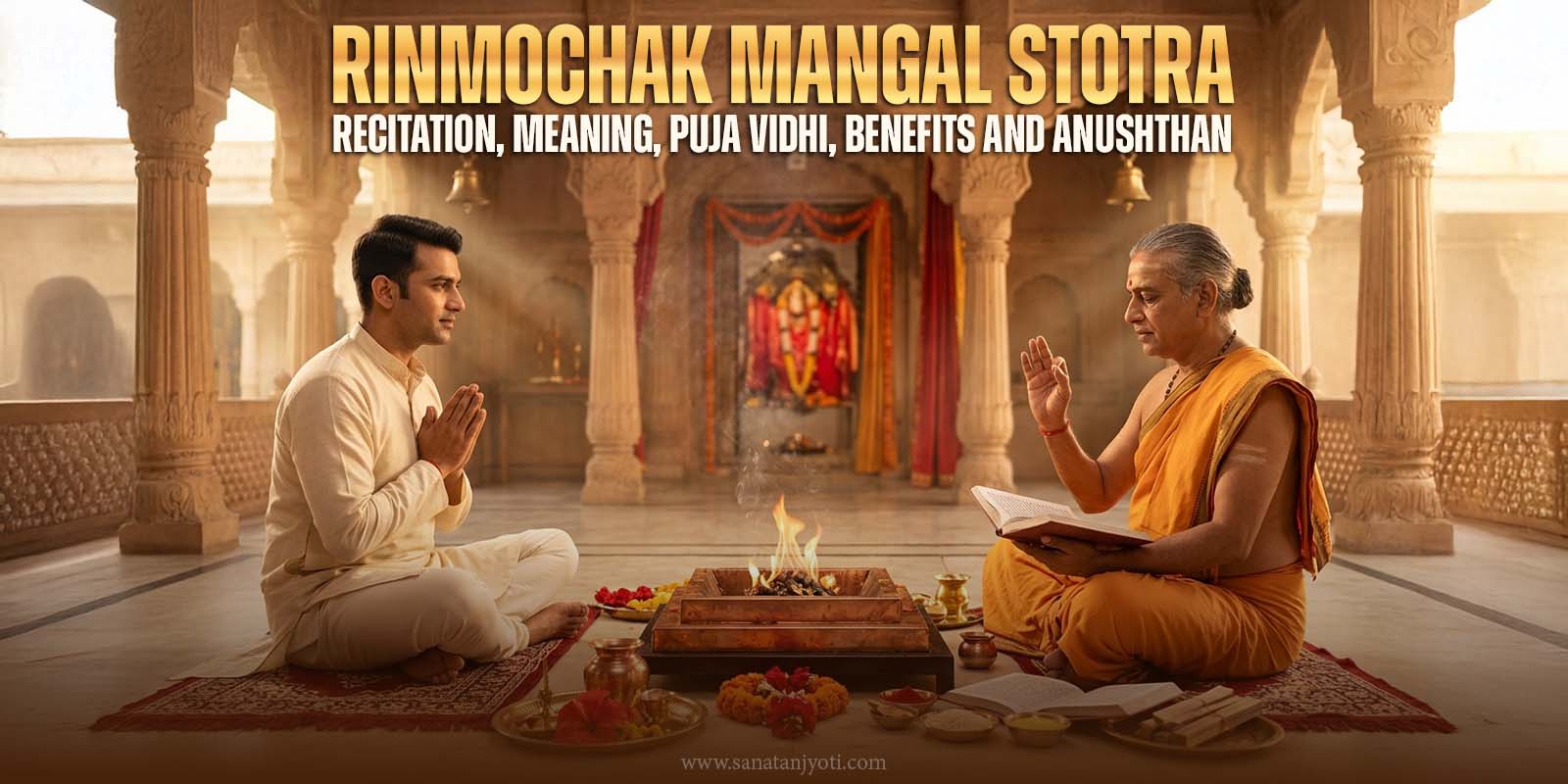
Mangal Stotra recitation is traditionally performed with devotion and Sankalp according to Vedic and traditional Puja practices. Before beginning the Puja, the worship area is purified, followed by Achaman and Sankalp.
Lord Ganesha is then remembered and worshipped, followed by meditation and worship of Lord Mangal. Red flowers, red Chandan, Akshat and other offerings are presented to Mangal Dev.
After this, Mangal Mantras are chanted and RinmochakMangal Stotra is recited.
At the end of the Puja, devotees pray to Lord Mangal for relief from debt, poverty, fear and other difficulties and for happiness and prosperity in life. The Puja is concluded with Prarthana, Aarti and Kshamayachana.
How is RinmochakMangal Stotra Recited?
RinmochakMangal Stotra is recited with devotion and regularity. Before beginning the recitation, one may meditate upon Lord Mangal and take a Sankalp for the desired purpose.
All 12 Shlokas of the Stotra are then recited with correct pronunciation and devotion. The Stotra describes the various names and forms of Lord Mangal and contains prayers for relief from debt, poverty, fear, suffering and other obstacles, as well as prayers for wealth and prosperity.
If the Stotra is being recited for a specific purpose, the Sankalp may be taken with that particular intention in mind. After completing the recitation, devotees pray to Lord Mangal to accept their prayers and bless them with his grace.
Is RinmochakMangal Stotra Anushthan Only for Debt-Related Problems?
The primary theme of RinmochakMangal Stotra is the prayer for relief from debt and financial difficulties. However, the Stotra also contains prayers for relief from fear, poverty, suffering and other obstacles.
Therefore, its purpose may vary according to an individual's circumstances. If you want to understand whether RinmochakMangal Stotra Anushthan is suitable for your situation or whether another Anushthan may be more appropriate, it is better to consult an Acharya Ji.
Can RinmochakMangal Stotra Be Recited for Mangal Dosha?
According to religious and astrological beliefs, Mangal Dev is worshipped to seek relief from obstacles associated with Mars. Therefore, Mangal Stotra may also be recited in cases of Mangal Dosha or other astrological conditions associated with Mars.
However, it is not necessary that the same remedy will be equally suitable for everyone simply because they have Mangal Dosha. It is considered more appropriate to select a remedy after examining the individual's birth chart.
If you want to know whether Mangal Dosha is present in your birth chart
You can download your detailed 86-page birth chart
and examine the position of Mars in your Kundli.
What is the Difference Between RinmochakMangal Stotra and Mangal Mantra?
RinmochakMangal Stotra consists of Shlokas praising the various names and forms of Lord Mangal, whereas a Mangal Mantra involves the repetition of a specific Mantra.
Both may be used for the worship of Lord Mangal and to seek his blessings, but their form and method of recitation are different.
For Whom Can RinmochakMangal Stotra Anushthan Be Performed?
This Anushthan may be performed particularly for a person who:
• Seeks relief from debt or financial difficulties.
• Wants to undertake a religious remedy for financial stability.
• Seeks relief from obstacles associated with Mars.
• Wishes to develop courage and self-confidence.
Before performing the Anushthan for a specific situation, it is necessary to consult an Acharya.
How to Book Rina Mochan Mangal Stotra Anushthan?
If you want to have the Rina Mochan Mangal Stotra Anushthan performed according to the prescribed rituals:
• You can explore the complete details of the [Rina Mochan Mangal Stotra Anushthan] available on SanatanJyoti and boo k the Anushthan according to your requirements.
Should I Perform RinmochakMangal Stotra Anushthan?
It depends on the individual's circumstances and purpose. If you want to know the appropriate religious remedy based on the position of Mars in your birth chart, Mangal Dosha or a debt-related problem, it is better to consult a qualified Acharya.
If you want to understand the position of Mars in your birth chart or whether RinmochakMangal Stotra Anushthan is suitable for you:
You can take free consultation from our Acharya Ji according to your specific questions.
Frequently Asked Questions About RinmochakMangal Stotra
1. What is RinmochakMangal Stotra?
RinmochakMangal Stotra is a Stotra dedicated to Lord Mangal Dev. It praises his various names and forms and contains prayers for relief from debt, poverty, fear and suffering.
2. How many Shlokas are there in RinmochakMangal Stotra?
RinmochakMangal Stotra consists of 12 Shlokas.
3. Why is RinmochakMangal Stotra recited?
According to religious beliefs, it is recited with prayers for relief from debt, financial difficulties, the blessings of Lord Mangal and protection from obstacles in life.
4. Can this Anushthan also be performed for Mangal Dosha?
Mangal worship is performed for Mangal Dosha and other astrological conditions associated with Mars. However, it is better to consult an Acharya to determine the appropriate remedy according to the individual's birth chart.
5. Does debt disappear simply by reciting the Stotra?
The Stotra contains prayers for relief from debt, but it should not be understood as a guarantee of a definite or immediate financial result. From a religious perspective, it is a means of worshipping Lord Mangal and praying for freedom from debt.
RinmochakMangal Stotra is an important Stotra dedicated to Lord Mangal Dev. It contains prayers for relief from debt, poverty, fear, suffering and obstacles. Its 12 Shlokas describe the various names and forms of Lord Mangal and express devotion and prayers for his grace.