Gayatri Mahayagya
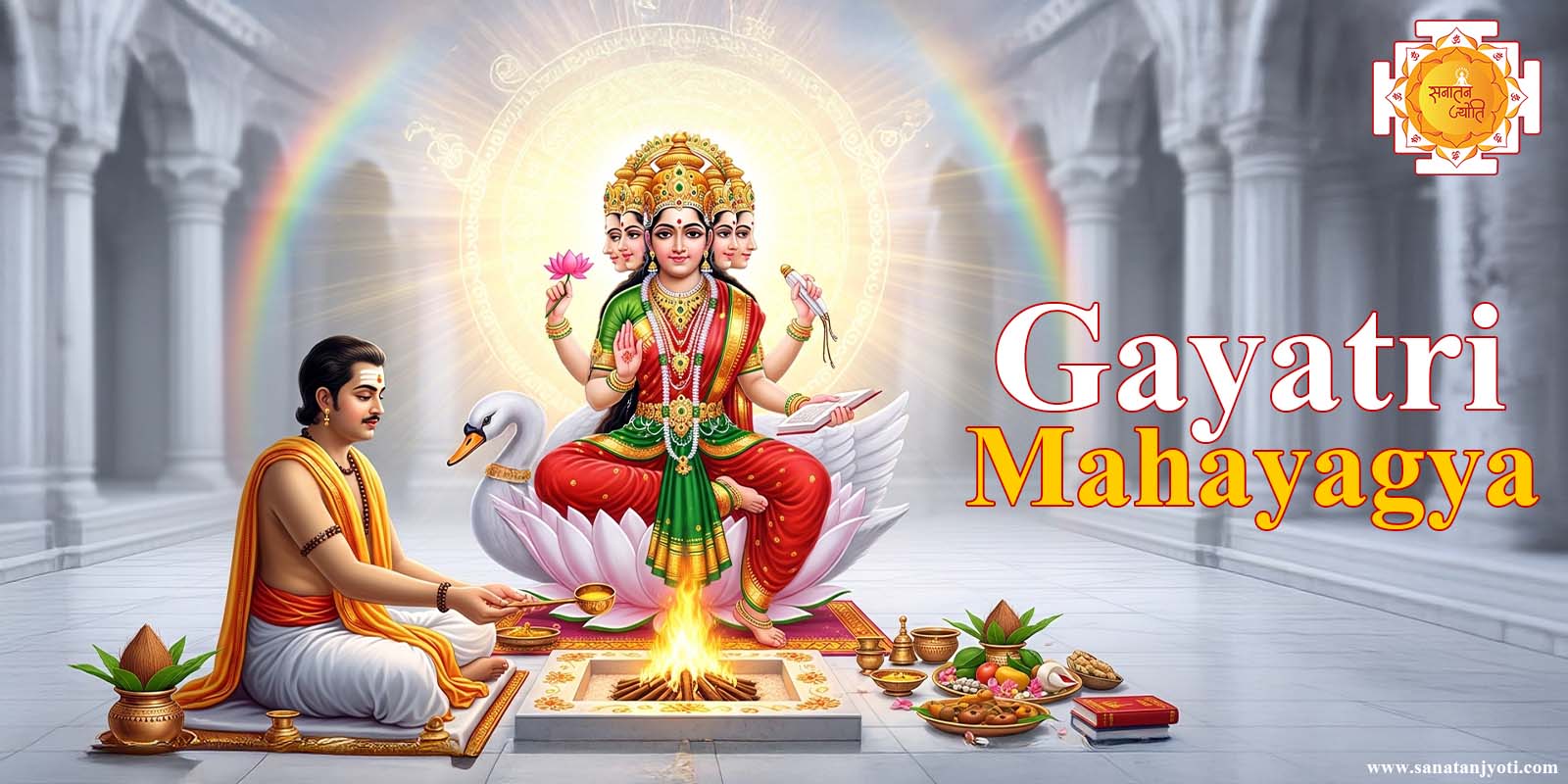
Gayatri Mahayagya is a grand and sacred Vedic Anushthan performed for the worship of Vedmata Gayatri. In this, collective chanting of the famous Gayatri Mantra of Rigveda is performed while offering oblations in holy fire pits. It is not merely a religious ritual but a deep spiritual practice that directly connects the seeker with the infinite power and grace of Mother Gayatri.
Yagya holds an extremely important place in ancient Vedic traditions. No auspicious sacrament or religious act is considered complete without a Yagya. This practice is highly helpful in the Personality Enhancement of the seeker, enabling the development of both internal and external qualities. Even in present times, grand collective Gayatri Mahayagyas are organized in many places, where the divine atmosphere purifies the seeker's inner self.
Why is it performed?
The primary goal of Gayatri Mahayagya is to remove all types of obstacles from the lives of individuals and society and spread the light of spiritual consciousness. On a personal level, the purpose of Gayatri Mahayagya is to awaken righteous intellect and spiritual peace within the seeker, so that they can receive the blessings of Good Fortune and favorable divine results.
When we invoke Mother Gayatri through Yagya, happiness and prosperity flow into the seeker's life. It is also mentioned in the Mahabharata that after the war, Yagya was considered the best means for peace. Therefore, this Mahayagya is performed for the resolution of all difficulties that disturb human life. On this holy occasion, the collective chanting of the Surya Gayatri Mantra fills the atmospher e with brilliance.
Major Benefits of Gayatri Mahayagya
The benefits derived from Gayatri Mahayagya are multi-dimensional, especially in resolving the major problems of today's era. This Yagya is as helpful as the Jupiter Empowerment ritual in developing spiritual consciousness and intellect. While the daily Jupiter Chant guides the seeker, this Mahayagya provides rapid benefits.
1. Relief from Stress and Mental Restlessness
• This divine yajna calms the restlessness of the mind.
• It reduces anxiety, worries, anger, and negative emotions.
• By creating mental peace, it provides deep inspiration and enthusiasm in life.
2. Resolution of Family Conflicts and Disputes
• When performed collectively, this yajna increases love and harmony within the family.
• Negative energies and quarrels are removed, strengthening unity in households.
• The positive environment of yajna fosters understanding, thereby enhancing family bonds.
3. Health Benefits and Protection from Diseases
• The medicinal smoke of yajna purifies the atmosphere and destroys harmful germs.
• It protects from many diseases and pandemics, ensuring greater health and safety.
• Regular practice keeps the environment clean and contributes to the physical and mental health of the family.
4. Removal of Poverty and Economic Growth
• The positive impact of yajna removes poverty and opens the path to wealth and prosperity.
• Regular yajna enhances health and efficiency, thereby increasing prosperity and progress.
• It eliminates obstacles to success, blessing the family with wealth, happiness, and progress.
5. Prevention of Natural Disasters and Environmental Purification
• Yajna maintains balance in the environment and reduces the intensity of natural disasters.
• Negative planetary influences and destructive powers are controlled through yajna.
• Regular yajna reduces the impact of earthquakes, floods, famines, epidemics, and other natural calamities.
Procedure for Organizing the Gayatri Mahayagya
The Gayatri Mahayajna is a specific Vedic ritual that is performed according to the directions of traditional Acharyas. Its process can be divided into four main stages—
1. Selection and Purification of Place
• For the yajna, a calm, pure, and open place is chosen.
• The ground and the altar (havan-kund) are purified with cow dung, Ganga water, and kush grass.
• The yajna altar (havan-kund) is sanctified with cow dung, water, kush grass, and sandalwood paste.
• The yajna mandap (area) is decorated with auspicious symbols, leaves, and flowers. At all four directions, mango or banana leaves and auspicious decorations are placed.
• A Swastik-shaped mandap is created, marking the yajna area as sacred and auspicious.
2. Preliminary Worship and Resolution (Sankalp)
• Before the yajna, Lord Ganesha’s worship is performed to ensure success without obstacles.
• The altar is established, and holy rivers, mountains, and deities are invoked.
• The yajman (performer) takes a pledge with Vedic mantras to fulfill his objectives.
• If an idol or picture of Goddess Gayatri is available, special worship is performed with rituals.
• Along with this, worship of Lord Ganesha, Shiva-Parvati, and deities of the Navagraha (nine planets) is also performed.
3. Main Yajna and Havan Process
• The main yajna begins with chanting of Vedic mantras and the Gayatri Mahamantra.
• According to the rule, 1/10th of the number of chanted mantras are offered into the havan fire as oblations.
o Example: For 24,000 chants, 2,400 offerings are made.
• In community Mahayajnas, thousands of participants collectively chant mantras and simultaneously offer oblations while pronouncing the word “Swaha.”
• Through collective mantra recitation and offerings, divine energy is generated in the atmosphere.
• During the yajna, participants also take vows for inner development and the removal of defects (doshas).
4. Purnahuti (Final Offering) and Conclusion
• After the prescribed offerings, the Purnahuti (final offering) is performed.
• Items such as ghee, coconut, five types of fruits, jaggery, honey, dry fruits, and sacred grains are offered as Purnahuti.
• After the final offering, Mangala Aarti is performed, creating a devotional and divine atmosphere.
• If there is an idol or picture of Goddess Gayatri, it is respectfully worshipped again.
• Finally, Gayatri Mata’s blessings are sought, and Prasad (sweets, Panchamrit, etc.) is distributed among all.
• In many places, arrangements are also made to serve meals to Brahmins and the community.
Essential Puja Materials for Gayatri Mahayajna
For this Mahayajna, the required items can mainly be divided into four categories—
A. Puja and Decoration Materials
1. Auspicious colored cloth (red/yellow)
2. Idol or picture of Mata Gayatri (Five-Faced Goddess)
3. Clothes, ornaments, and adornments for decoration
4. Kalawa/Mauli, Sindoor, turmeric, sandalwood, kumkum
5. Incense sticks, dhoop, camphor, pure ghee/oil lamps
6. Garland of flowers (wheat, gram) and fresh flowers
7. Mango leaves toran (decorative festoon)
8. Panchpal (betel nut, clove, cardamom, betel leaves, etc.)
9. Swastik symbol and auspicious kalash
B. Havan Materials
1. Copper/earthen havan kund
2. Dry mango wood (Samidha)
3. Pure desi ghee (cow’s ghee preferred)
4. Camphor, prepared havan mixture (barley, rice, sesame seeds, jaggery, sugar, etc.)
5. Panchmeva (cashew, almonds, raisins, pistachios, coconut pieces, etc.)
6. Special herbs (nagarmotha, jatamansi, giloy, shatavari, bel leaves, etc.)
7. Guggul, loban, sandalwood powder
8. Fresh seasonal fruits
9. Black sesame, seasonal fruits, sugar, dry coconut
C. Special Puja Materials
1. Gayatri Mantra book/Chalisa
2. Japa mala (rudraksha or crystal or kamalgatta)
3. Panchpatra, spoon
4. Coconuts (whole and broken)
5. Akshat (unbroken rice mixed with turmeric and kumkum)
6. Seasonal fruits, sweets for naivedya
7. Large lamp for uninterrupted lighting (Akhand Deep)
8. Panchamrit (milk, curd, ghee, honey, sugar)
9. Red/yellow cloth
10. Copper/silver kalash
11. Idols/pictures of deities (Ganesh, Shiva-Parvati, Vishnu-Lakshmi, Ramdarbar, Hanuman, etc.)
D. Material Purification and Other Essentials
1. Cow dung cakes, cow urine, and Ganga water
2. Puja seat (Kusha grass mat or blanket)
3. Conch shell, bell, and chaur (fly whisk)
4. Puja plate, lamp, incense, stand for incense sticks, and other supportive items
Frequently Asked Questions
1. What is Gayatri Mahayagya and why is it significant?
Gayatri Mahayagya is a divine ritual for worshipping Vedmata Gayatri, involving the chanting of mantras along with offerings (Aahuti) into the holy fire. It is significant because it enhances spiritual strength, removes life's obstacles, and fills the environment with positive energy. In the current era of Kali Yuga, it is considered the supreme medium for both self-welfare and the welfare of the world.
2. When is the most auspicious time to conduct a Gayatri Mahayagya?
While this Yagya can be performed at any time, festivals such as Vasant Panchami (Gayatri Jayanti), Navratri, Guru Purnima, and Ram Navami are considered extremely auspicious. Performing the Yagya on Sundays, or during Pushya Nakshatra and Amrit Siddhi Yoga, is also particularly beneficial.
3. What are the primary benefits of Gayatri Mahayagya?
It provides benefits at three distinct levels:
1. Physical: The smoke generated from the Yagya purifies the air, which leads to various health benefits.
2. Mental: It helps in relieving stress and provides deep peace of mind.
3. Spiritual: It facilitates the flow of happiness, prosperity, success, and positive energy within the household.
4. Can Gayatri Mahayagya only be performed on a large scale?
No. It can be performed at an individual or family level using a small Havan Kund at home. Devotion and the purity of mantra pronunciation are more important than the scale of the event. Depending on your convenience and resolve, you can opt for a 1, 5, 9, or 108-Kundi Yagya.
5. What rules are mandatory to follow while participating in a Gayatri Mahayagya?
Physical and mental purity is the most essential requirement. Participants should wear clean clothes after bathing. During the Yagya, it is mandatory to maintain a pure and sattvic mindset, pronounce the mantras clearly, and offer the Aahuti with full faith. Maintaining discipline during collective Yagyas is also very important.




 +91 9219765437